About 492 minutes
Somewhere in Red Gap — A Closer Reading
Exploration Survival Adventure Tales
113,021 recorded words. 18 minutes difference from this book's estimate.
View Gutenberg source #14376
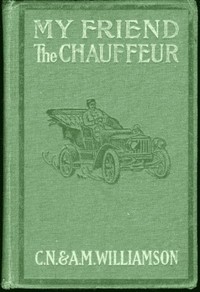
My Friend the Chauffeur — Background and Themes can be approached with a clearer sense of reading commitment from its source measurements: 117,187 words, 8 hr 30 min estimated reading time, and 12 detected text sections.
The text analysis averages about 19.7 words per sentence, while the detected sections provide another way to judge how the source is divided.
Project Gutenberg metadata also associates the work with “Europe -- Fiction,” connecting these edition facts with the source record’s subject description.
Explore this collection
These alternatives are selected using recorded categories and estimated reading time.
About 492 minutes
Exploration Survival Adventure Tales
113,021 recorded words. 18 minutes difference from this book's estimate.
View Gutenberg source #14376About 431 minutes
Exploration Survival Adventure Tales
98,936 recorded words. 79 minutes difference from this book's estimate.
View Gutenberg source #18093About 420 minutes
Exploration Survival Adventure Tales
96,507 recorded words. 90 minutes difference from this book's estimate.
View Gutenberg source #15135Search stored excerpts and compare books → Choose by your preferences →
Choices use stored catalog measurements. Estimates vary with reading speed. A shared category is a catalog label, not a claim that two books have the same argument or literary quality.
Search reads excerpt text stored with this catalog and links to its associated Gutenberg record. The connection is stored in the site database; this tool does not recheck that every excerpt is word-for-word identical to that external record. Excerpt search does not cover every chapter and does not verify historical publication dates.
Catalog snapshot checked: 2026-09-25. Coverage: 95 public books, 95 available source excerpts.
Read the complete public-domain text at its original source.
Read on Project GutenbergThe novel begins with a classified advertisement read aloud: an English titled amateur automobilist offers to conduct two or three ladies, Americans preferred, to picturesque European centres. This opening device immediately establishes the premise—a motor tour arranged through a newspaper ad—and introduces the first narrator, Ralph Moray, whose wry commentary frames the scheme as a “fake” needing “leading up to.” The excerpt shows a playful, self-aware tone, with Ralph bursting into laughter to deflect his friend Terry’s scrutiny. The address is withheld, hinting at secrets to come.
From the start, the narrative voice is distinctive: colloquial, ironic, and fond of dramatic pauses. The story is structured in parts, each told by a different character—Ralph, Beechy Kidder, the Countess, Maida Destrey, and Terence Barrymore. This polyphonic approach promises multiple perspectives on the same journey, a technique that rewards attention to whose eyes are seeing.
The table of contents reveals an unusual structure: five parts, each narrated by a different character. Part I is told by Ralph Moray; Part II by Beechy Kidder; Part III by the Countess; Part IV by Maida Destrey; Part V by Terence Barrymore. The chapter headings themselves are playful—“A Chapter of Surprises,” “A Chapter of Revenges,” “A Chapter of Childishness,” “A Chapter of Motor Mania”—suggesting that each narrator brings a distinct emotional register and agenda.
In the excerpts, Beechy Kidder’s narration (Part II) is notably more impulsive and candid. She describes a dinner scene where she deliberately provokes tension, noting her own sulkiness: “if one puts on a certain expression of face, after a while one finds thoughts that match it stealing into one’s mind.” This self-awareness contrasts with Ralph’s more guarded opening. Readers should track who is speaking and how their personality colors the account of events.
The automobile is not merely a mode of transport but a central plot device. The advertisement specifies a car “accommodating five persons” with “capacity for carrying small luggage,” and journeys of “about 100 miles a day.” Technical details appear naturally: references to gradients, route-books, and garages ground the adventure in the practical realities of early motoring. In one excerpt, the chauffeur (Mr. Barrymore) consults local advice about the road to Bellagio, noting that “motors occasionally do it” but gradients are steep.
The car also creates social dynamics. It enables the mixed-gender group to travel together, generating romantic and competitive tensions. The Prince’s comment about the Brianza route and his prior knowledge of the road hint at a knowledgeable rival. The vehicle’s reliability—or lack thereof—becomes a source of suspense, as suggested by chapter titles like “A Chapter of Brakes and Worms” and “A Chapter of Horrors.”
The excerpts reveal a keen attention to social maneuvering. Beechy’s narration of the dinner scene exposes a web of unspoken rules: Maida wears only black, grey, or white because she plans to enter a convent—a detail Beechy blurts out spitefully. The reaction is immediate: Maida turns “white instead of red,” and Mr. Barrymore looks as if he “would rather shake me than eat his dinner.” The Prince, meanwhile, adjusts his behavior based on who is present, devoting attention to the mother when the daughter is occupied.
These moments of tension are rendered through gesture and implication rather than explicit statement. Beechy’s internal commentary—“I longed to ‘vipe’ somebody”—adds a layer of comic frustration. The narrative rewards readers who attend to what is left unsaid, as characters often communicate through looks, silences, and strategic seating arrangements.
The itinerary is woven into the narrative. The advertisement promises “any picturesque centres in Europe,” and the excerpts mention specific locations: the Riviera, San Dalmazzo, Milan, the Lake of Como, Bellagio, and the Brianza. These are not mere backdrops but active settings that shape the plot. The Prince’s knowledge of the road to Bellagio, for instance, positions him as a potential guide or rival.
The travelogue aspect is balanced by personal drama. The novel’s subtitle might well be “a motor tour with romantic complications.” The excerpts show characters discussing cathedrals and scenery while also negotiating jealousy, flirtation, and family secrets. Readers interested in early twentieth-century European travel will find period details—such as the mention of a “pink Riviera newspaper” and the logistics of a multi-day car trip—embedded in the social story.
Because the novel is told by five narrators, a first reading benefits from noting the chapter headings and the named narrator at the start of each part. The excerpts suggest that each voice offers a different emotional temperature and level of reliability. Pay attention to how the same event might be refracted through different perspectives—the dinner scene, for example, might look very different if told by Maida or Mr. Barrymore. The motor tour provides a framework for episodic adventures, but the real journey may be in the shifting sympathies of the tellers.
It’s funny how the road unwinds in My Friend the Chauffeur, each narrator handing off the wheel mid-journey, leaving you to catch your breath between chapters. That same quiet, episodic drift haunts David Lannarck, Midget An Adventure Story — Background and Themes, another tale where the scenery matters less than whom you meet along the way. I still think of that odd, gentle loneliness.
A brief reflection can help important ideas stay with you longer.