About 376 minutes
Ella Barnwell: A historical romance of border life — Inside the Classic
Exploration Survival Adventure Tales
86,445 recorded words. 28 minutes difference from this book's estimate.
View Gutenberg source #15424
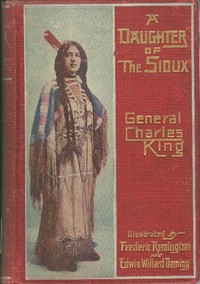
This digital edition of A Daughter of the Sioux: A Tale of the Indian frontier — Themes and Context is described by source-level measurements including 80,019 words, 5 hr 48 min estimated reading time, and 8 detected text sections.
The text analysis averages about 22.9 words per sentence, while the detected sections provide another way to judge how the source is divided.
Project Gutenberg metadata also associates the work with “Western stories,” connecting these edition facts with the source record’s subject description.
Explore this collection
These alternatives are selected using recorded categories and estimated reading time.
About 376 minutes
Exploration Survival Adventure Tales
86,445 recorded words. 28 minutes difference from this book's estimate.
View Gutenberg source #15424About 309 minutes
Exploration Survival Adventure Tales
71,014 recorded words. 39 minutes difference from this book's estimate.
View Gutenberg source #20384About 401 minutes
Exploration Survival Adventure Tales
92,017 recorded words. 53 minutes difference from this book's estimate.
View Gutenberg source #16629Search stored excerpts and compare books → Choose by your preferences →
Choices use stored catalog measurements. Estimates vary with reading speed. A shared category is a catalog label, not a claim that two books have the same argument or literary quality.
Search reads excerpt text stored with this catalog and links to its associated Gutenberg record. The connection is stored in the site database; this tool does not recheck that every excerpt is word-for-word identical to that external record. Excerpt search does not cover every chapter and does not verify historical publication dates.
Catalog snapshot checked: 2026-09-25. Coverage: 95 public books, 95 available source excerpts.
Read the complete public-domain text at its original source.
Read on Project GutenbergThe novel opens not with a skirmish but with a bureaucratic friction: the major commanding is perturbed by Lieutenant Field's repeated requests for leave, and the post adjutant's sharp rejoinder carries "to the verge of disrespect." This early exchange establishes a narrative voice that favors clipped, formal dialogue and interior tension over immediate action. King builds the frontier setting through institutional detail—morning reports, post returns, and the hierarchy of command—before the Sioux outbreak is even mentioned. The pacing is deliberate, almost claustrophobic, confined to the major's office and the adjutant's defensive pride.
The narrative voice in the opening chapters is tightly controlled, often filtered through the major's perspective. His "grim, gray eyes" and the adjutant's "keen, blue eyes" are set in opposition, and King uses this visual contrast to underscore a power struggle that is never openly stated. The dialogue is laden with subtext: the major "hazards" a remark about a corrected return, and the adjutant responds "quick, sharp and positive." These exchanges reveal character through indirectness—the major's unease, the adjutant's defiance—rather than through exposition. The prose is spare, with few adjectives, and the rhythm mimics military brevity. Later, when the general arrives, the voice shifts: the narrative becomes more expansive, describing the general's "stout Concord wagon" and the "paling starlight," but still retains a clipped precision in dialogue. King avoids sentimental interiority; even the general's concern for Field is shown through action—refusing coffee until he sees the wounded—rather than stated emotion.
The novel's pacing is marked by a sudden acceleration once the Sioux outbreak is introduced. The early chapters move at the speed of garrison life—slow, repetitive, focused on paperwork and permission. But the transition to action is abrupt: the narrative jumps from the major's office to a night encounter, then to a grave discovery, and soon to a running fight. King compresses time through summary phrases like "on went Webb, with Blake, Gregg, Ray and their juniors," and the prose becomes more paratactic, with shorter sentences and fewer qualifiers. The description of the wounded Lieutenant Field being "borne in the arms of pitying soldiers" is one of the few moments of overt pathos, and it arrives after a long passage of tactical movement. This shift in pace mirrors the unpredictability of frontier warfare: the calm of the post is shattered by news from the front, and the narrative never fully returns to its initial deliberateness.
King uses recurring details to build atmosphere without explicit description of the Sioux. The "sign of the bar shoe" (a chapter title) and the rifled desk suggest an unseen enemy operating within the fort itself. The general is puzzled by "something uncanny about this outbreak," and the narrative hints at a conspiratorial "somebody" stirring up the Indians. These details—a stolen document, a mysterious footprint, a vanished heroine—create a sense of paranoia that complements the external threat. The setting is rendered through specific place names (Frayne, Laramie, the Elk River) and military logistics (ambulances, telegraph lines, Concord wagons), grounding the mystery in a recognizable geography. The illustrations by Remington and Deming, referenced in the front matter, likely reinforced this visual specificity, though the text itself relies on concrete nouns—"pines of the Big Horn," "the old post hospital"—to evoke the frontier.
Readers attentive to the novel's opening will find that the tension between Lieutenant Field and the major is never fully resolved in the excerpts, and the general's investigation into the Sioux outbreak remains incomplete. The narrative rewards close attention to dialogue and to the gaps between what characters say and what they mean. King's prose, while plain, carries a cumulative weight that makes the sudden violence of the later chapters more striking. Approach the text as a study in military restraint and its rupture.
Reading about Charles King’s frontier dialogue, I recalled sitting on my grandfather’s porch, turning pages of old Westerns while the dusk crept in. That same unhurried tension between waiting and action lives in The lost hunter: A tale of early times — Key Ideas to Explore, which feels less like adventure and more like remembering a quiet morning before something unspoken happens. Funny how certain pauses stay with you.
Use these questions to collect your thoughts before moving on.