About 151 minutes
The Melting of Molly — Reading Notes
Relationships Society Historical Narratives
34,574 recorded words. 6 minutes difference from this book's estimate.
View Gutenberg source #15817
The source record for The Cricket on the Hearth — Story, Setting & Ideas measures this digital text at 35,895 words, 2 hr 37 min estimated reading time, and 4 detected text sections.
The text analysis averages about 17.2 words per sentence, while the detected sections provide another way to judge how the source is divided.
Project Gutenberg metadata also associates the work with “England -- Social life and customs -- 19th century -- Fiction,” connecting these edition facts with the source record’s subject description.
Explore this collection
These alternatives are selected using recorded categories and estimated reading time.
About 151 minutes
Relationships Society Historical Narratives
34,574 recorded words. 6 minutes difference from this book's estimate.
View Gutenberg source #15817About 172 minutes
Relationships Society Historical Narratives
39,411 recorded words. 15 minutes difference from this book's estimate.
View Gutenberg source #15808About 182 minutes
Relationships Society Historical Narratives
41,669 recorded words. 25 minutes difference from this book's estimate.
View Gutenberg source #20438Search stored excerpts and compare books → Choose by your preferences →
Choices use stored catalog measurements. Estimates vary with reading speed. A shared category is a catalog label, not a claim that two books have the same argument or literary quality.
Search reads excerpt text stored with this catalog and links to its associated Gutenberg record. The connection is stored in the site database; this tool does not recheck that every excerpt is word-for-word identical to that external record. Excerpt search does not cover every chapter and does not verify historical publication dates.
Catalog snapshot checked: 2026-09-25. Coverage: 95 public books, 95 available source excerpts.
Read the complete public-domain text at its original source.
Read on Project GutenbergThe cricket that chirps on John Peerybingle's hearth is more than a seasonal ornament; it becomes a silent judge of human conduct. In the excerpt, the insect's song is absent, yet its symbolic weight presses on every scene. The story's moral geometry is laid bare in a single, sprawling sentence: a mother's speech defending a marriage of convenience, delivered with such circular logic that it is 'quite unanswerable—which is the happy property of all remarks that are sufficiently wide of the purpose.' Dickens here exposes the gap between stated principle and lived feeling, a gap the cricket's chirp will eventually bridge.
The mother's monologue is a masterpiece of evasion. She thanks Heaven for her daughter's obedience while taking 'no credit to herself,' then immediately claims it is 'entirely owing to herself.' She praises Mr. Tackleton as 'an undeniable individual' and 'a son-in-law to be desired,' yet the very next breath admits her daughter 'had for some time rejected his suit.' She insists she 'would not allude to the past' and then does so at great length. The speech is a closed loop: every assertion is hedged, every denial is an affirmation. Dickens does not need to state that this is hypocrisy; the syntax itself performs it. The mother's final wish—to be 'packed up and disposed of in any genteel place of burial' after the wedding—turns marriage into a funeral, a joke that lands with a chill.
John Peerybingle, the carrier, moves through the scene with mechanical cheer. His toast to 'To-morrow: the Wedding-day' is a ritual repeated on all 'Picnic occasions.' He kisses his child, calls her 'young shaver,' and departs with the promise to 'be back at the old time.' This regularity is the story's baseline—a world of dependable returns. Against it, two figures break the pattern. Dot, his wife, is 'too flushed and discomposed to adapt herself to any small occurrence.' Bertha, the blind daughter of Caleb Plummer, 'rose up hurriedly before the rest, and left the table.' Her exit is wordless, but Caleb watches her with 'an anxious wondering face, that never altered its expression.' The contrast between John's unthinking jollity and Bertha's silent departure creates a tension that the cricket will eventually resolve.
In a story built on small, telling details, the sleeping infant is a comic marvel. Tilly Slowboy, the nursemaid, has deposited the child 'asleep (and, strange to say, without damage) in a little cot of Bertha's furnishing.' The parenthetical aside—'without damage'—is pure Dickens: it acknowledges the slapstick potential of Tilly's incompetence while also hinting at a world where harm is always possible. The cot is Bertha's handiwork, linking the blind girl to the child's safety. The carrier's farewell to the baby—'Time will come, I suppose, when you'll turn out into the cold, my little friend, and leave your old father'—is a sudden, jarring note of mortality in a scene of domestic bustle. It is the only moment when John's good humour falters, and it passes as quickly as it came.
Readers attentive to Dickens's craft will watch how the cricket's chirp—absent from this excerpt—enters the story as a counterweight to the mother's rhetoric. The domestic details (the Veal and Ham Pie, the bottled beer, the old horse's bait) are not mere colour; they are the solid ground against which the story's moral fancies are measured. Pay particular attention to Bertha's silences and Caleb's anxious gaze; they are the quiet centre around which the noise of the wedding preparations revolves.
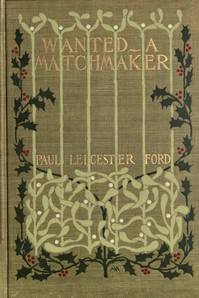
That rain fell all afternoon, and I kept returning to the cricket’s chirp—how it steadied the room against the chill of that mother’s logic. It made me think of other quiet bargains people make. Later, thumbing through the shelf, I found Wanted—A Match Maker — Key Ideas to Explore and lingered on its title, sensing a similar hush around practical hearts.
A brief reflection can help important ideas stay with you longer.