About 419 minutes
A Prince of Sinners — Key Ideas to Explore
Relationships Society Historical Narratives
96,278 recorded words. 7 minutes difference from this book's estimate.
View Gutenberg source #16971
Jorrocks' Jaunts and Jollities — Reading Notes can be approached with a clearer sense of reading commitment from its source measurements: 94,616 words, 6 hr 52 min estimated reading time, and 9 detected text sections.
The text analysis averages about 22.7 words per sentence, while the detected sections provide another way to judge how the source is divided.
Project Gutenberg metadata also associates the work with “England -- Fiction,” connecting these edition facts with the source record’s subject description.
Explore this collection
These alternatives are selected using recorded categories and estimated reading time.
About 419 minutes
Relationships Society Historical Narratives
96,278 recorded words. 7 minutes difference from this book's estimate.
View Gutenberg source #16971About 420 minutes
Relationships Society Historical Narratives
96,493 recorded words. 8 minutes difference from this book's estimate.
View Gutenberg source #17498About 425 minutes
Relationships Society Historical Narratives
97,670 recorded words. 13 minutes difference from this book's estimate.
View Gutenberg source #19752Search stored excerpts and compare books → Choose by your preferences →
Choices use stored catalog measurements. Estimates vary with reading speed. A shared category is a catalog label, not a claim that two books have the same argument or literary quality.
Search reads excerpt text stored with this catalog and links to its associated Gutenberg record. The connection is stored in the site database; this tool does not recheck that every excerpt is word-for-word identical to that external record. Excerpt search does not cover every chapter and does not verify historical publication dates.
Catalog snapshot checked: 2026-09-25. Coverage: 95 public books, 95 available source excerpts.
Read the complete public-domain text at its original source.
Read on Project GutenbergThe narrator of Jorrocks' Jaunts and Jollities announces himself as the "bard of Eastcheap," a self-consciously grand voice that invokes classical muses while describing foxhunting in Surrey. This mock-heroic tone—complete with invocations to Diana and apostrophes against Indolence—immediately signals that the book will treat its city-bred sportsmen with affectionate satire. Yet the narrator's high-flown rhetoric is repeatedly undercut by sudden drops into colloquialism: "But gently, Pegasus!—Here again, boys, and 'let's to business,' as they say on 'Change." The effect is a narrative voice that oscillates between epic pretension and earthy practicality, mirroring the contrast between Jorrocks' aspirations and his actual exploits.
The opening chapter establishes a pattern of grandiloquent address followed by bathetic collapse. The narrator calls upon "thou, Goddess of the Silver Bow—chaste Diana" to guide his quill, then immediately checks himself with a marketplace phrase. This technique recurs throughout: elaborate sentences pile up modifiers like "thoroughbred, prime, bang-up, slap-dash, break-neck, out-and-out artist" only to land on a mundane subject—a city man within three miles of the Monument. The effect is cumulative: the reader learns to expect the narrator's enthusiasm to overshoot its object, creating comedy from the gap between elevated language and the decidedly unheroic world of Cockney sportsmen.
In the Margate chapter, the narrative voice shifts dramatically to incorporate the actual cries of a town crier, reproduced with onomatopoeic punctuation: "Ring-a-ding, ring-a-ding, dong." Each announcement—lost children, stray dogs, steam-packet departures—is rendered in full, creating a rhythmic litany that mimics the chaotic energy of a seaside resort. The passage then cuts to the betting frenzy between rival steamboats, where dialogue is compressed into rapid-fire wagers: "I'll bet a hundred ponds—a thousand pounds—a million pounds—half the National Debt, if you like." This section shows Surtees varying pace by alternating between catalogued public announcements and staccato exchanges, building a sense of crowded, competitive bustle that contrasts with the more leisurely hunting scenes.
The narrative moves between the measured rhythms of the hunt—where the narrator dwells on landscape and hound work—and the frantic tempo of urban or resort life. In the Surrey hunting passages, sentences are longer, with clauses accumulating like fences: the soil is described as "wretched starvation stuff most profusely studded with h..." (the excerpt cuts off, but the pattern is clear). At Margate, by contrast, the prose fragments into lists and exclamations. This structural alternation suggests that the book's comedy arises partly from the collision of two worlds: the leisurely, ritualized sport of the countryside and the noisy, commercial energy of the city. The narrator's voice adapts to each setting, never settling into a single register.
Readers will find that the narrator's shifting tone—from mock-heroic invocation to street-crier mimicry—is not inconsistency but design. Pay attention to how Surtees uses punctuation and repetition to control tempo: long, winding sentences for the hunt; short, stacked phrases for the crowd. The excerpts suggest a work that rewards attention to its verbal texture as much as to its comic incidents.
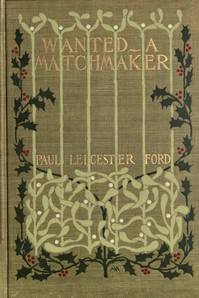
There’s something about Mr. Jorrocks—his bluster and sudden tumbles into absurdity—that lingers like the smell of wet tweed after a long ride. I found myself thinking of that same restless, hopeful fumbling in the quiet corners of Wanted—A Match Maker — Key Ideas to Explore. Both feel like old friends, half-laughing at their own schemes, half-relying on luck we rarely admit we need.
A brief reflection can help important ideas stay with you longer.