About 372 minutes
The Splendid Folly — Key Ideas to Explore
Relationships Society Historical Narratives
85,393 recorded words. 6 minutes difference from this book's estimate.
View Gutenberg source #16427
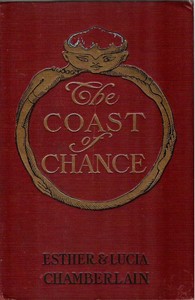
The catalog record for The Coast of Chance — Key Ideas to Explore provides practical reading context through 86,798 words, 6 hr 18 min estimated reading time, and 8 detected text sections.
The text analysis averages about 15.2 words per sentence, while the detected sections provide another way to judge how the source is divided.
Project Gutenberg metadata also associates the work with “Love stories,” connecting these edition facts with the source record’s subject description.
Explore this collection
These alternatives are selected using recorded categories and estimated reading time.
About 372 minutes
Relationships Society Historical Narratives
85,393 recorded words. 6 minutes difference from this book's estimate.
View Gutenberg source #16427About 363 minutes
Relationships Society Historical Narratives
83,262 recorded words. 15 minutes difference from this book's estimate.
View Gutenberg source #16040About 347 minutes
Relationships Society Historical Narratives
79,725 recorded words. 31 minutes difference from this book's estimate.
View Gutenberg source #15710Search stored excerpts and compare books → Choose by your preferences →
Choices use stored catalog measurements. Estimates vary with reading speed. A shared category is a catalog label, not a claim that two books have the same argument or literary quality.
Search reads excerpt text stored with this catalog and links to its associated Gutenberg record. The connection is stored in the site database; this tool does not recheck that every excerpt is word-for-word identical to that external record. Excerpt search does not cover every chapter and does not verify historical publication dates.
Catalog snapshot checked: 2026-09-25. Coverage: 95 public books, 95 available source excerpts.
Read the complete public-domain text at its original source.
Read on Project GutenbergThe novel opens with Flora Gilsey poised before a mirror, not merely admiring a new gown but scrutinizing her own reflection as an object in a picture. The dining room behind her is described as a space of "bright, hard glitter" and "high, harsh tone of newness," where cut-glass and silver dominate and shadows offer no play for imagination. This setting immediately establishes a tension between Flora's inner life and her external surroundings—a house ordered by someone else, designed for large functions rather than intimate truths.
The narrative voice dwells on surfaces and perceptions, hinting that what is seen may be as deceptive as the polished floors. Flora's sense of incongruity, feeling herself "in a foreign country" within her own home, foreshadows the deeper dislocations to come: a vanishing mystery, a name passed around a table, and the arrival of a man who will challenge her understanding of loyalty and love.
The opening scene uses the mirror not as a tool of vanity but as a device of self-estrangement. Flora sees herself "keenly set against" the brilliance of the dining room, yet she quickly shifts from personal appraisal to considering herself "only as an object in the foreground of a picture." This detachment recurs throughout the excerpts: she later reflects on her own behavior as if watching a stranger, amazed that she has "let herself go to this extent." The dining room's "shining vacant faces of its floors and walls" mirror the vacant social roles she is expected to inhabit. The text repeatedly returns to visual framing—thresholds, doorways, reflections—suggesting a world where appearances are both stage and trap.
Flora's dilemma is shaped by what is not said. Harry knows something about Kerr—he has seen him before "under circumstances of which Harry wouldn't talk"—but he offers only hints and innuendoes, dropping the name "Farrell Wand" without explanation. Flora herself avoids scrutinizing her own motives: "she had only acted, acted; only asked herself what to do next, and never why." The narrative withholds full disclosure, leaving the reader as uncertain as Flora. The tension between what is known and what is spoken drives the plot forward, as Flora stands "between the two—standing hesitating between her love of one and her loyalty to the other." The excerpts suggest a mystery that is less about the stolen ring than about the characters' hidden histories and unvoiced allegiances.
Flora's internal rebellion is articulated through a striking metaphor: the rules of society become "no more than proper parlor furniture for a castaway on a desert island." This image captures her sense of isolation and the inadequacy of conventional morality in the face of her predicament. She reflects that she has been "docile to public opinion, buxom to conventions" all her life, but now finds these things "not vital enough for her proposition." The narrative frames her transformation as a return to "primal harmonies" that transcend the "modulations" of her decade. This is not a simple rejection of society but a recognition that her situation demands a different scale of values—one in which Kerr, despite wanting only "plunder," becomes "the most real thing in all her life."
The excerpts offer a portrait of a woman caught between two men and two versions of herself, but the full novel likely deepens these contrasts. Readers attentive to the recurring imagery of mirrors, thresholds, and surfaces will find a narrative that uses setting to reflect inner conflict. The mystery of the ring may resolve, but the more compelling question—how Flora reconciles her awakened self with the demands of her world—remains the true coast of chance.
The rain kept me indoors with The Coast of Chance, tracing Flora’s careful surface composure until it cracked. That afternoon, her quiet tug between expectation and a stranger’s claim lingered. I set it down, and my hand drifted to the shelf, pulling out Wayside Courtships — Key Ideas to Explore. Different paths, same undercurrent—loyalty not announced, just felt.
A brief reflection can help important ideas stay with you longer.