About 476 minutes
Ma Pettengill — Text and Context
Technology Airships Imagined Futures
109,388 recorded words. 6 minutes difference from this book's estimate.
View Gutenberg source #14348
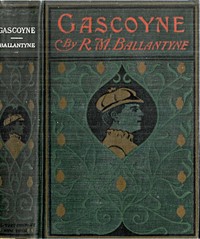
For Gascoyne, The Sandal-Wood Trader: A Tale of the Pacific — Key Ideas to Explore, the stored edition analysis reports 110,757 words, 8 hr 2 min estimated reading time, and 10 detected text sections.
The text analysis averages about 20.4 words per sentence, while the detected sections provide another way to judge how the source is divided.
Project Gutenberg metadata also associates the work with “Merchant ships -- Fiction,” connecting these edition facts with the source record’s subject description.
Explore this collection
These alternatives are selected using recorded categories and estimated reading time.
About 476 minutes
Technology Airships Imagined Futures
109,388 recorded words. 6 minutes difference from this book's estimate.
View Gutenberg source #14348About 451 minutes
Technology Airships Imagined Futures
103,625 recorded words. 31 minutes difference from this book's estimate.
View Gutenberg source #16573About 517 minutes
Technology Airships Imagined Futures
118,685 recorded words. 35 minutes difference from this book's estimate.
View Gutenberg source #19802Search stored excerpts and compare books → Choose by your preferences →
Choices use stored catalog measurements. Estimates vary with reading speed. A shared category is a catalog label, not a claim that two books have the same argument or literary quality.
Search reads excerpt text stored with this catalog and links to its associated Gutenberg record. The connection is stored in the site database; this tool does not recheck that every excerpt is word-for-word identical to that external record. Excerpt search does not cover every chapter and does not verify historical publication dates.
Catalog snapshot checked: 2026-09-25. Coverage: 95 public books, 95 available source excerpts.
Read the complete public-domain text at its original source.
Read on Project GutenbergThe opening chapter introduces a schooner described as "light and graceful as a seamew," with "low, black-hulled" form and "raking, taper masts"—details that immediately associate the vessel with either a yacht or a pirate. This ambiguity sets the tone for the entire work, where appearances are repeatedly questioned. The catalog subjects list "Merchant ships -- Fiction" and "Ship captains -- Fiction," yet the excerpts quickly complicate these categories: the captain, Gascoyne, is suspected of being the pirate Durward, and his ship, the Foam, is fired upon by a man-of-war. The narrative does not simply celebrate adventure but dwells on moral uncertainty, as characters argue over Gascoyne's true nature.
The excerpts show that much of the story's tension is carried through argumentative dialogue, not action. In one extended scene, the widow Mrs. Stuart insists that Gascoyne "will not injure a hair of her head," while her son Henry retorts, "Of the pirate Durward!" The pastor, Mr. Mason, adds that Gascoyne is "a suspicious character, to say the best of him." These exchanges reveal a community divided in judgment. The widow's defense is notably personal: she speaks "like one who sought to convince herself rather than her hearer." This suggests that Gascoyne's past intimacy with her family is a key source of conflict. The catalog subject "Adventure and adventurers -- Fiction" is present, but the excerpts prioritize the psychological and ethical struggle over physical exploits.
Religious language permeates the excerpts, particularly in scenes of loss. After an attack on the village, the pastor is told to trust that Alice is "in the hands of God—of a loving Father." The widow uses faith to counter despair, saying "unless a miracle is wrought in her behalf, nothing can save her." This is not mere background piety; it drives character motivation. The pastor's grief is described physically: "with both hands on his head he seemed to attempt to crush down the thoughts." The widow's calm certainty about Gascoyne's protection of Alice is framed as a form of faith. The catalog does not list religion as a subject, yet the excerpts show that Christian consolation is central to the plot's emotional logic.
The chapter titles in the table of contents reveal a deliberate pattern of suspense and reversal. Phrases like "Murderous Designs Frustrated," "Suspicions Allayed and Reawakened," and "Greater Mysteries than Ever" indicate a narrative that constantly builds and undercuts expectations. The title "A Terrible Doom for an Innocent Man" suggests a legal or moral crisis. The final chapter, "Retributive Justice—And Conclusion," promises resolution but the excerpts do not reveal how. This structure aligns with the catalog's adventure classification but emphasizes mystery and moral complexity. The chapter "The Missionary—Suspicions, Surprises, and Surmises" further ties religious figures to the plot's uncertainties.
Readers should attend to how Ballantyne uses dialogue to advance plot and character, rather than relying solely on action. The widow's role as a defender of Gascoyne is particularly noteworthy, as it challenges the simple pirate-versus-hero dichotomy. The excerpts do not resolve whether Gascoyne is truly a pirate or a misunderstood trader; the story's interest lies in that unresolved tension. Pay attention to the recurring motif of appearances—ships, men, and motives—and how religious faith is used to counter fear and doubt.
Gascoyne’s quiet crises, where a man’s sins and prayers blur, always reminded me of another tale — the unnamed misery festering beneath a colonial surface. Both whisper that souls are rarely what they appear. I’ve shelved them together for years. The Mark of the Beast — Reading Notes holds that same strange, patient ache.
Save your reaction, strongest insight, and memorable passage.