About 482 minutes
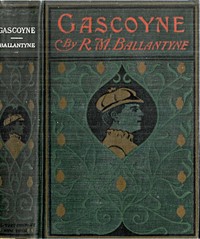
Gascoyne, The Sandal-Wood Trader: A Tale of the Pacific — Key Ideas to Explore
Technology Airships Imagined Futures
110,757 recorded words. 35 minutes difference from this book's estimate.
View Gutenberg source #15689

For Cobwebs and Cables — Themes and Context, the stored edition analysis reports 118,685 words, 8 hr 37 min estimated reading time, and 10 detected text sections.
The text analysis averages about 19.5 words per sentence, while the detected sections provide another way to judge how the source is divided.
Project Gutenberg metadata also associates the work with “Christian life -- Fiction,” connecting these edition facts with the source record’s subject description.
Explore this collection
These alternatives are selected using recorded categories and estimated reading time.
About 482 minutes
Technology Airships Imagined Futures
110,757 recorded words. 35 minutes difference from this book's estimate.
View Gutenberg source #15689About 476 minutes
Technology Airships Imagined Futures
109,388 recorded words. 41 minutes difference from this book's estimate.
View Gutenberg source #14348About 568 minutes
Technology Airships Imagined Futures
130,604 recorded words. 51 minutes difference from this book's estimate.
View Gutenberg source #15380Search stored excerpts and compare books → Choose by your preferences →
Choices use stored catalog measurements. Estimates vary with reading speed. A shared category is a catalog label, not a claim that two books have the same argument or literary quality.
Search reads excerpt text stored with this catalog and links to its associated Gutenberg record. The connection is stored in the site database; this tool does not recheck that every excerpt is word-for-word identical to that external record. Excerpt search does not cover every chapter and does not verify historical publication dates.
Catalog snapshot checked: 2026-09-25. Coverage: 95 public books, 95 available source excerpts.
Read the complete public-domain text at its original source.
Read on Project GutenbergThe novel opens with Roland Sefton motionless in his office, the clock having struck eleven, his clerk departed. Stretton renders his paralysis through a striking simile: he is "bound fast by many strong cords, which no effort could break or untie." The narrative voice immediately establishes a pattern of interiority, moving from external stillness to a sweeping vision of his life unfolding "not in painful memories of the past only, but in terrified prevision of the black future." This dual temporal focus—past and future collapsing into a frozen present—characterizes the novel's psychological intensity. The title's metaphor of cobwebs and cables suggests entanglements both fragile and unbreakable, a tension the opening scene embodies.
The narrative pace in Cobwebs and Cables is markedly uneven. Early chapters linger in suspended moments: Roland's office-bound vigil, Felicita's prolonged illness, Phebe's deliberate conversations. Stretton uses physical immobility to signal psychological crisis. Roland "had not stirred hand or foot for a long while now," and Felicita's breakdown is described as a "sharp attack of illness" that forces stillness upon the household. Yet these static scenes are punctuated by bursts of compressed action—an absconding, a confession, a departure from Riversborough—often reported rather than dramatized. The chapter titles themselves alternate between stasis ("Waiting for the News," "Dead to the World") and decisive events ("Abscounded," "A Second Fraud"). This rhythm creates a sense of entrapment: characters are caught between the weight of the past and the urgency of revelation.
Stretton's narrator frequently addresses the reader with rhetorical questions and moral asides, a technique that shapes the novel's ethical texture. When Felicita confesses she never loved Roland, the narrator interjects: "How easily is this direction given, and how difficult, how impossible, in many cases, is it to follow!" Such commentary does not merely explain but judges, aligning the reader with a Christian moral framework. Yet the voice is not uniformly didactic. In scenes of private anguish—Roland's sigh for "Poor Acton!" or Phebe's "clear, honest gaze"—the narration becomes intimate, almost novelistic in its sympathy. The shift between omniscient judgment and close focalization creates a layered perspective: we see characters both from within and from a moral distance, a duality that mirrors the novel's concern with hidden guilt and public reputation.
Certain objects and phrases recur with accumulating significance. The office clock that strikes eleven in the opening chapter reappears as a marker of time's passage and its failure to resolve guilt. The phrase "dead to the world" (a chapter title) echoes in Felicita's sense of being "quite alone" and in Roland's symbolic death. Letters and circulars—the "circular issued from the Old Bank," the letter Canon Pascal received—function as fragile cables connecting past and present, often carrying incomplete or misleading information. Stretton also returns to the motif of silence: Roland's dumb grief, Felicita's inexplicable conduct, Phebe's secret. These details are not merely atmospheric; they are structural, building a web of withheld knowledge that the narrative slowly, and never fully, untangles. The reader, like the characters, must read between the lines.
Readers attentive to Stretton's manipulation of pace and perspective will find a novel that resists easy resolution. The dual-part structure—separated by "After Many Years"—invites comparison between Roland's early paralysis and later attempts at redemption. Pay particular attention to how the narrator's moral stance shifts between parts, and how secondary characters like Phebe and Canon Pascal serve as ethical counterweights. The title's metaphor is best understood not as a single image but as a dynamic system: cobwebs of deceit and cables of consequence, each strand pulling the narrative forward.
That book’s quiet unraveling of secrets stayed with me, how a single withheld truth can hollow out a life. It made me think of another story, lighter on the surface but carrying that same weight of unspoken choices. Shorty McCabe on the Job — Text and Context—sometimes the softer paths leave the deepest echoes.
A brief reflection can help important ideas stay with you longer.