About 202 minutes
Fern's Hollow — Reading Notes
Technology Airships Imagined Futures
46,405 recorded words. 48 minutes difference from this book's estimate.
View Gutenberg source #16853

The source record for Forty-one Thieves: A Tale of California — Inside the Classic measures this digital text at 35,257 words, 2 hr 34 min estimated reading time, and 4 detected text sections.
The text analysis averages about 16.6 words per sentence, while the detected sections provide another way to judge how the source is divided.
Project Gutenberg metadata also associates the work with “Robbery -- Fiction,” connecting these edition facts with the source record’s subject description.
Explore this collection
These alternatives are selected using recorded categories and estimated reading time.
About 202 minutes
Technology Airships Imagined Futures
46,405 recorded words. 48 minutes difference from this book's estimate.
View Gutenberg source #16853About 99 minutes
Technology Airships Imagined Futures
22,715 recorded words. 55 minutes difference from this book's estimate.
View Gutenberg source #15385About 92 minutes
Technology Airships Imagined Futures
21,026 recorded words. 62 minutes difference from this book's estimate.
View Gutenberg source #18207Search stored excerpts and compare books → Choose by your preferences →
Choices use stored catalog measurements. Estimates vary with reading speed. A shared category is a catalog label, not a claim that two books have the same argument or literary quality.
Search reads excerpt text stored with this catalog and links to its associated Gutenberg record. The connection is stored in the site database; this tool does not recheck that every excerpt is word-for-word identical to that external record. Excerpt search does not cover every chapter and does not verify historical publication dates.
Catalog snapshot checked: 2026-09-25. Coverage: 95 public books, 95 available source excerpts.
Read the complete public-domain text at its original source.
Read on Project GutenbergThe novel opens not with a fictional scene but with a real tombstone. Hall reproduces the inscription for William F. Cummins, killed by highwaymen near Nevada City in 1879, and describes the Pennsylvania cemetery where it stands. This grounding in documented fact—the author’s father rode the same stage route days after the murder—gives the tale an evidentiary weight unusual in adventure fiction. The narrative then shifts to California, where the stagecoach robbery and its aftermath unfold through a series of encounters, mistaken identities, and cross-country pursuits.
The first chapter does not begin with action but with a literal monument. Hall transcribes the full epitaph for William F. Cummins, including the biblical warning, and situates the grave in Reedsville, Pennsylvania. He notes that the church once stood in the middle of the grounds and that early Presbyterians carried muskets against Indians. This historical layering—salmon runs, Amish farmers, the “romance and glamour” of California graves—establishes a tension between the quiet East and the violent West. The author then reveals his personal connection: his father, returning from the murder scene, told the story that “fired my youthful imagination.” The structure thus frames the ensuing fiction as a recovered history, a tale snatched from oblivion by a witness’s son.
Hall builds the central crime around a specific landmark: a large stump that concealed the robbers. The stage-driver Mat Bailey, who traveled with Cummins that day, becomes a source of detail. The author’s father rode the same road, passed the stump, and “became almost an eye-witness.” This repeated emphasis on physical geography—the road, the stump, the Sierras—anchors the story in place. The robbery itself is not described in the excerpts, but the aftermath sends detective John Keeler on a journey that mirrors the author’s own research: retracing routes, interviewing witnesses, and reading the landscape for clues. The stump functions as a silent witness, a fixed point around which the narrative revolves.
John Keeler, the detective, is not omniscient. In a Louisville bar, he meets a man he recognizes from Nevada City. The man’s “wild gleam” and too-hearty laugh escape Keeler’s interpretation. They exchange stories—a Frenchman learning English, a miner’s tall tales—and Keeler dismisses him as a “sensible miner” heading east. Only later does the reader learn this was Darcy, Cummins’s killer. Hall uses dramatic irony: Keeler shakes the murderer’s hand, drinks with him, and misses every clue. The scene is built on dialogue and gesture—the handshake, the bar, the poker talk—rather than interior monologue. Keeler’s limitations become a structural device, prolonging the mystery and emphasizing the randomness of justice.
Darcy and his partner Collins adopt false names and personas. Darcy becomes “Thorn,” a lumberman and churchgoer in Indiana. Hall dwells on the performance: Darcy spins California yarns to a Sunday-school class, shoots any lad who gets impertinent, and is “looked upon by the young men as a Californian who had succeeded.” The novel’s interest lies less in the crime than in the criminals’ ability to vanish into respectability. Keeler, meanwhile, can “distinguish an ex-miner among a thousand” by his handshake and speech. The dialogue is salted with period slang—“Put it there, partner!”, “the drinks are on me,” “pesky lizards”—that marks characters as belonging to the gold fields. Hall uses these verbal tics to create a world where identity is fluid and a murderer can become a model citizen.
Readers should attend to the novel’s use of place as evidence. Hall repeatedly returns to real locations—the Reedsville cemetery, the stage road, the stump—as if testing fiction against fact. The story moves between East and West, but its center is the gap between what Keeler sees and what the reader knows. The pleasure lies in watching the detective fail, the killers vanish, and the snows of the Sierras cover the trail.
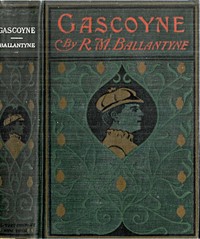
That tombstone at the heart of Forty-one Thieves stayed with me—how a single name can pull a whole life, and a whole landscape, into focus. It made me think of another story where place shadows every choice, the Pacific as present as any character. There’s a quiet ache in Gascoyne, The Sandal-Wood Trader: A Tale of the Pacific — Key Ideas to Explore that felt familiar, like remembering rain after it’s gone.
Use these questions to collect your thoughts before moving on.