About 340 minutes
Torchy As A Pa — Context and Discussion
Fairy Tales Myths Imaginary Worlds
78,060 recorded words. 6 minutes difference from this book's estimate.
View Gutenberg source #20629
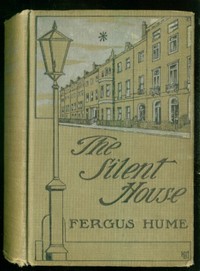
Before opening The Silent House — Text and Context, the edition data offers a quick orientation: 76,691 words, 5 hr 34 min estimated reading time, and 8 detected text sections.
The text analysis averages about 14.9 words per sentence, while the detected sections provide another way to judge how the source is divided.
Project Gutenberg metadata also associates the work with “Detective and mystery stories,” connecting these edition facts with the source record’s subject description.
Explore this collection
These alternatives are selected using recorded categories and estimated reading time.
About 340 minutes
Fairy Tales Myths Imaginary Worlds
78,060 recorded words. 6 minutes difference from this book's estimate.
View Gutenberg source #20629About 310 minutes
Fairy Tales Myths Imaginary Worlds
71,166 recorded words. 24 minutes difference from this book's estimate.
View Gutenberg source #15578About 360 minutes
Fairy Tales Myths Imaginary Worlds
82,596 recorded words. 26 minutes difference from this book's estimate.
View Gutenberg source #19231Search stored excerpts and compare books → Choose by your preferences →
Choices use stored catalog measurements. Estimates vary with reading speed. A shared category is a catalog label, not a claim that two books have the same argument or literary quality.
Search reads excerpt text stored with this catalog and links to its associated Gutenberg record. The connection is stored in the site database; this tool does not recheck that every excerpt is word-for-word identical to that external record. Excerpt search does not cover every chapter and does not verify historical publication dates.
Catalog snapshot checked: 2026-09-25. Coverage: 95 public books, 95 available source excerpts.
Read the complete public-domain text at its original source.
Read on Project GutenbergFergus Hume's The Silent House opens not with a corpse but with a description of Geneva Square, a "backwater of the great river of town life" where Lucian Denzil, a briefless barrister, lives in rooms chosen for economy. The square's tall grey houses, clean steps, and white-curtained windows suggest a respectable facade that will soon be disrupted. The novel's structure relies on a series of movements between this quiet domestic space and the bustling city beyond, with the titular house—silent and enigmatic—serving as a fixed point around which characters circle. Hume builds his mystery through repeated visual motifs: shadows on blinds, a parti-coloured ribbon, and a cloak purchased by a foreigner. These objects are traced through scenes of conversation and confrontation, each chapter advancing the investigation by moving characters from drawing rooms to shops to offices, creating a rhythm of inquiry and evasion.
From the second chapter, "Shadows on the Blind," Hume establishes a visual language of concealment and revelation. The murder is first perceived not directly but as a shadow play: Lucian sees two figures—a man and a woman—cast against a window blind. This indirect witnessing sets the tone for a narrative that consistently withholds full clarity. The shadow motif recurs throughout, as characters are described in terms of their outlines or silhouettes before their identities are confirmed. The cloak, too, functions as a kind of shadow—a garment that obscures its wearer while leaving traces. When Lucian and Lydia Vrain trace the cloak to a shop, the saleswoman remembers the buyer only as "a dark man," a foreigner. These repeated images of darkness and partial visibility create a world where truth is always just beyond the edge of sight, and where the act of seeing is itself unreliable.
Hume structures the investigation as a series of journeys between locations, each scene propelling the plot forward through physical movement. Lucian travels from Geneva Square to Serjeant's Inn, from Mrs. Vrain's drawing room to the shop of Baxter & Co., from Jersey Street to Berwin Manor. These shifts are not merely geographical; they represent different social spheres—the quiet domesticity of the square, the professional world of the law, the commercial bustle of the shop, and the rural retreat of the manor. Each location yields a new piece of evidence or a new witness, and the narrative momentum depends on these transitions. The chapter titles themselves often indicate movement: "The House in Jersey Street," "Two Months Pass," "At Berwin Manor." This restless progression contrasts with the stillness of the silent house, which remains a fixed point of mystery even as the investigation ranges outward.
Hume places unusual emphasis on material objects as carriers of meaning. The cloak, the ribbon, the veil, and the assurance money are not merely clues but are treated as characters in their own right, each with a history that must be traced. The cloak, for instance, is examined for a private mark, its purchase recorded in an account book, its fabric described as "rabbit-skin." This attention to the physical details of evidence reflects the novel's interest in the tangible traces of crime. Yet objects also mislead: the cloak leads Lucian to suspect Count Ferruci, but the Count's purchase of it may have been for another woman entirely. The parti-coloured ribbon, introduced in Chapter X, becomes a link between characters, but its significance is only gradually revealed. Hume uses these objects to create a network of associations that the detective must untangle, and the reader is invited to follow the same process of deduction.
The novel's scenes are heavily reliant on dialogue, which serves both to advance the plot and to reveal character. Conversations often take place in domestic settings—drawing rooms, offices—and are marked by a tension between what is said and what is withheld. Lydia Vrain's speech, for example, is peppered with American colloquialisms ("Sakes!", "You bet I did!") that distinguish her from the more formal Lucian. Her volubility contrasts with the Count's defensiveness and the servant's evasiveness. Hume uses these exchanges to layer information: a character may deny involvement while inadvertently revealing a motive, as when Lydia insists the Count could not have killed her husband because she refused him two months after the murder—a statement that only confirms his possible motive. The dialogue thus becomes a form of verbal shadow play, where the truth is glimpsed indirectly through what is half-said or contradicted.
Readers approaching The Silent House will find a mystery that unfolds through careful attention to visual detail and spatial movement. Hume's method rewards those who track the recurrence of objects and the shifts between scenes, as each new location and each new conversation adds a layer to the puzzle. The silent house itself—never fully described—remains a suggestive absence, a space that holds its secrets until the final chapters. This is a novel that trusts its readers to observe closely, to note the shadows on the blind and the color of a ribbon, and to follow the trail of evidence as it moves from drawing room to shop to manor.
I remember The Silent House, how its shadows linger like old friends who never quite leave. Lucian’s patient prying feels akin to Mr. Ford’s quiet blundering in Torchy As A Pa — Context and Discussion — both men circling a heart they barely understand. There’s kinship in that stumble toward warmth, beneath every muffled truth.
Capture what you thought, learned, and would like to remember.